Reconditioning & Reprocessing
Triple-wash, inspect, re-bottle and pressure-test — done right.
Reconditioning is our craft. Incoming tanks are logged, washed, inspected inside and out, re-bottled when needed, pressure-tested and graded. You can send us your fleet for turnaround or simply buy the finished, documented units.
Why it’s greener
Reconditioning reuses the cage and pallet — the two heaviest, most carbon-intensive parts of a tote — indefinitely.
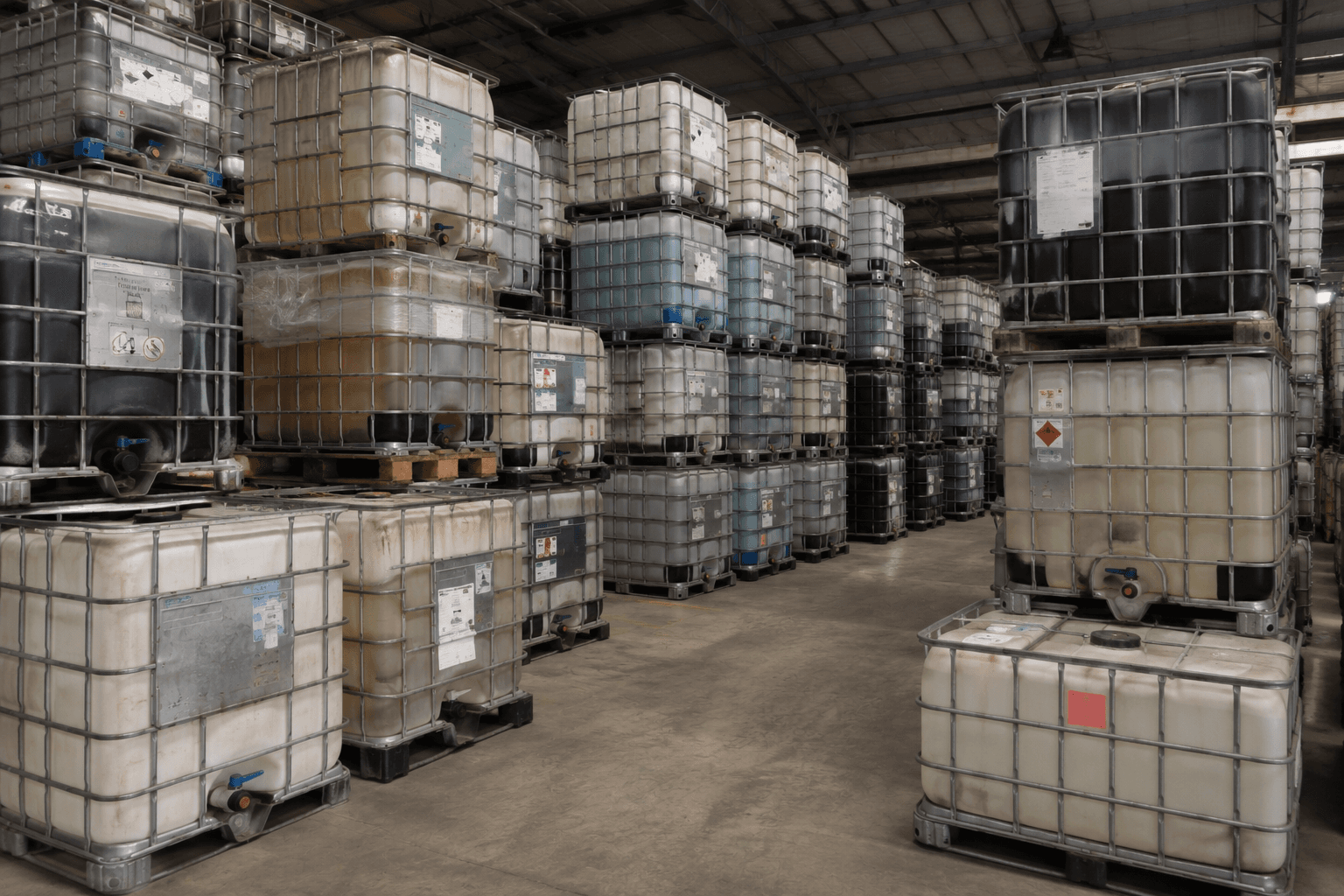
Reconditioning is our craft, and it is more than a rinse. Incoming tanks are logged by prior contents, run through a hot-water triple-wash or fitted with a fresh bottle, inspected inside and out, pressure- and leak-tested, and tagged with a traceable grade. You can send us your fleet for turnaround or simply buy the finished, documented units off our floor.
The environmental win is built into the process: by reusing the steel cage and pallet — the two heaviest, most carbon-intensive parts of a tote — we keep the bulk of every tank’s embodied energy in service instead of remaking it from ore.
Intake & log
Prior contents recorded and the tank is quarantined by grade.
Wash & rebottle
Hot triple-wash, or a fresh bottle dropped into the reclaimed cage.
Test & grade
Pressure test, leak check and a traceable grade tag applied.
- Hot-water triple-wash line
- Bottle swap keeps the steel cage in service
- Pressure and leak testing on every unit
- Grade tags for audit-ready traceability
Every step, explained.
Here’s exactly what happens from the moment you reach out to the moment the job is done.
Intake and prior-contents logging
Every incoming tank is logged by lot, prior contents and external condition. Tanks are quarantined by grade category and never mixed until cleared.
Pre-wash assessment
We inspect each tank before washing to determine the process path: triple-wash to standard, triple-wash to food-grade, or rebottle with a new HDPE inner bottle.
Hot-water triple-wash
Tanks routed to wash run three full hot-water cycles that dissolve and flush residue. Wash temperature, duration and water quality are logged.
Rebottling (when needed)
When washing cannot achieve the required grade, a brand-new HDPE bottle is fitted to the reclaimed steel cage and pallet — preserving the heavy, carbon-intensive structural components.
Interior and exterior inspection
Post-wash, every inner surface, fitting, valve and outer cage weld is inspected. Units that don’t pass go back through or to rebottle — never out the door substandard.
Pressure and leak test
Every assembled unit is pressure-tested and leak-checked. Failures are pulled for rework. The test result is recorded in the unit’s documentation.
Grade tagging and release
Passing tanks receive a traceable grade tag: date, inspector, process path, grade achieved. That tag travels with the tank as your audit trail.
Everything in this service
Prior-contents logging and quarantine by grade
Hot-water triple-wash line
Bottle replacement (rebottling) that reuses the cage
Full interior and exterior inspection
Pressure and leak testing on every unit
Traceable grade tags for audit-ready documentation
What this service doesn’t cover
We’d rather be upfront than have you discover a gap after the fact. Here’s what falls outside this service — and we’ll refer you if you need it.
- UN recertification for over-pack hazmat shipments (requires a certified test lab)
- Custom color coding or brand labeling
- Interior lining for highly aggressive chemicals (we’ll refer you)
- Repair of severely deformed or crushed cage panels beyond rebottling scope
Information we need from you
The more detail in your first email, the faster and more accurate your quote.
- Prior contents for every tank in your fleet (no exceptions — safety and compliance)
- Approximate quantity and desired output grade
- Condition overview — photos help if you’re sending a mixed lot
- Desired turnaround window or target date
- Your QA documentation requirements if any (food safety plans, SQF, etc.)
From request to done
Intake & log
Prior contents recorded; the tank is quarantined by grade.
Wash or rebottle
Hot triple-wash, or a fresh bottle dropped into the reclaimed cage.
Test & grade
Pressure and leak test, then a traceable grade tag is applied.
What goes into the number.
We quote every job individually by email. Here are the variables that shape what you’ll see in that quote — no surprises.
- Prior contents — hazardous or heavy-residue products require more intensive processing
- Process path — wash is less expensive than rebottle for a given grade
- Bottle condition — cages and pallets in good shape keep costs down
- Volume — per-unit cost falls with larger fleet turnarounds
- Turnaround speed — rush lots may carry a premium
- Output grade required — industrial < rinsed < food-grade
What you receive.
Every transaction generates documents. Here’s what you’ll have for your records, procurement file or sustainability report.
- Intake log with prior contents and incoming condition
- Process record (wash cycles or rebottle documentation)
- Pressure and leak test results per unit
- Grade tag on every tank (physical) plus digital record on request
- Certificate of reconditioning for your supplier audit file
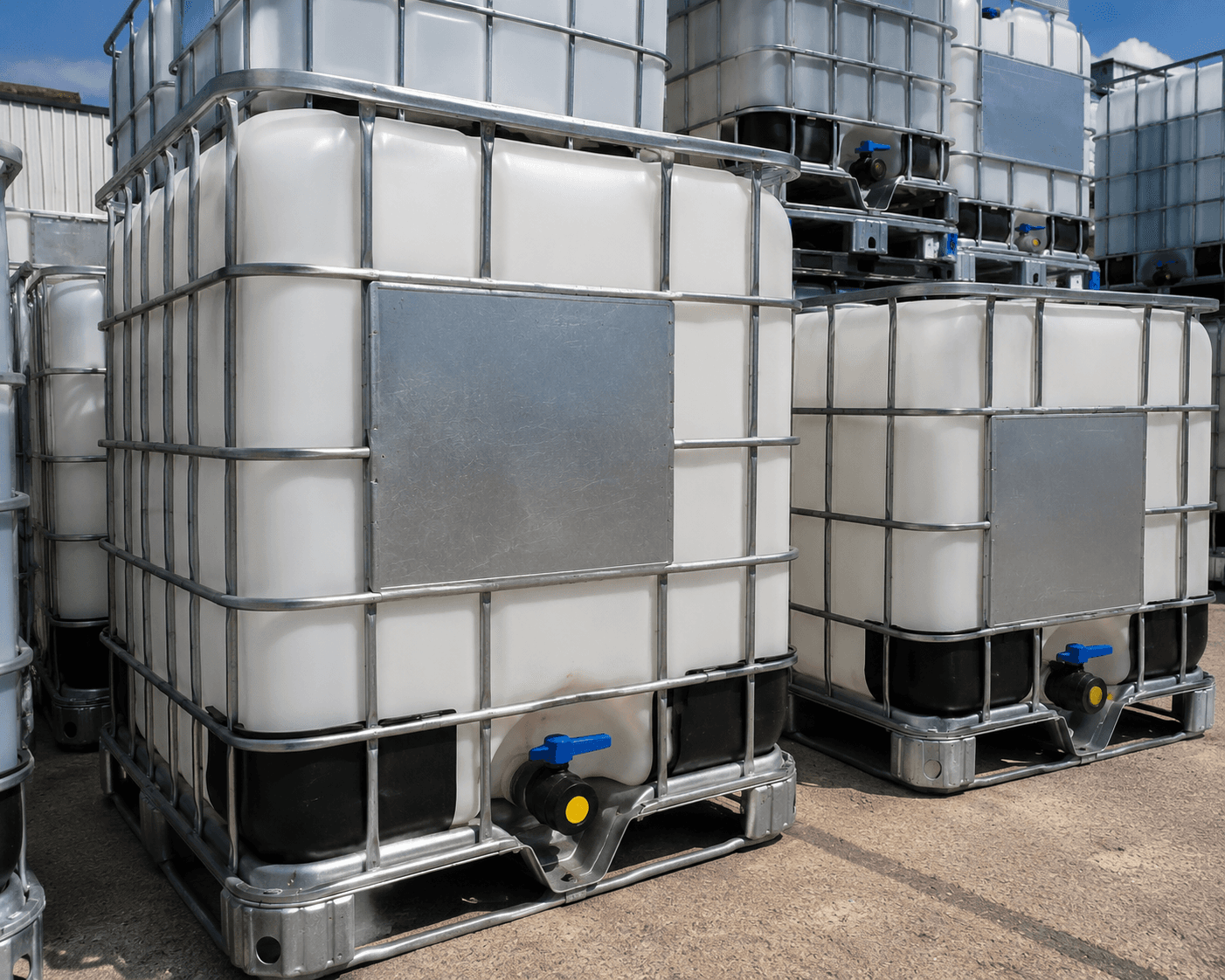
How we keep things safe, documented and audit-ready.
Safety practices
- All incoming tanks are quarantined by prior contents before any processing begins
- Wash water and rinsate from regulated chemicals is handled as industrial waste per applicable regs
- Inspectors wear appropriate PPE for the residue category of each tank being opened
- Pressure tests use controlled air at rated PSI — tanks are never over-pressured
- Rebottled units use virgin HDPE bottles rated for the intended service
Compliance notes
- Food-grade reconditioning follows FDA guidelines for food-contact HDPE surfaces
- Grade tags and process logs provide the traceability required by FSMA and ISO audits
- UN-rated totes that need recertification for hazmat shipment must go to a DOT-approved requalification facility — we’ll advise
- We document all wash-water and rinsate disposal in accordance with applicable Illinois EPA requirements
We do the whole job. In-house. Documented.
Email-first quoting
Every request gets a written quote within one business day — quantity, grade, delivered price and lead time in a single reply. No phone tag, no vague "call for pricing."
In-house full lifecycle
We buy, recondition, transport and recycle in one operation. No middlemen. No outsourced reconditioning that we can’t verify. The tank you get is the tank we processed.
Documented to the tote
Grade tags, prior-contents disclosure, pressure-test records and bills of lading travel with every unit. Your QA team and auditors get the paper trail they need.
Reuse-first philosophy
We recondition before we recycle, and we recycle before we landfill. That’s the correct order — and it’s how we run every tank that comes through the yard.
Real sustainability numbers, not marketing fluff.
Reuse beats recycling. Recycling beats landfill. We operate that hierarchy on every tank, every time — and we give you the documentation to prove it to your auditors.
Steel saved per cage reused
The steel cage and pallet are the heaviest, most carbon-intensive parts of an IBC. Every reuse cycle avoids remaking them from ore.
Per tote vs. ~50 drums
An IBC replaces 5–7 drums per trip, slashing packaging count, handling time and transport emissions at once.
Landfill goal for end-of-life tanks
HDPE reground, steel recovered, pallets repaired or chipped. When a tank is truly done, every component still has a next life.
Documented reductions
Reconditioning and recycling records support your Scope 3 Category 1 and Category 4 packaging emissions reporting.
Midwest coverage from a central Peoria hub.
Peoria hub location
Geographically central to Illinois and within a day’s drive of Chicago, St. Louis, Indianapolis, Des Moines and Milwaukee — one hub that reaches the full Midwest efficiently.
Backhaul route optimization
Deliveries and empty pickups are batched onto shared routes. You rarely pay for a trip that runs one-way.
Full truckload to single tote
40-tote truckloads for volume buyers; LTL for smaller orders. The freight rate reflects your quantity accurately.
Reverse logistics built in
When you’re done with tanks, we’re already running routes near you. Pickup scheduling integrates with delivery planning.
Reconditioning & Reprocessing — FAQs
Can you recondition my own fleet of totes?
What is the difference between washing and rebottling?
Do you test every tank?
Can reconditioned tanks reach food-grade?
How long does reconditioning take?
What happens to totes that can’t be reconditioned?
Do you recondition non-standard tote sizes?
Can I see the grade documentation before I use the tanks?
Request a quote for Reconditioning & Reprocessing.
Email us your specs. We reply within one business day with a real price, grade options and a lead time — no phone required.
From the IBC Journal
Other services
Buy IBC Totes
Reconditioned, food-grade and new tanks in stock and ready to ship.
Sell Your Totes
Turn idle empties into cash and free up your yard.
Transport & Logistics
Pickup, delivery and reverse logistics across the Midwest.
Recycling & Recovery
Responsible end-of-life recovery of HDPE, steel and pallets.
Ready to keep some steel in the loop?
Get a same-week quote to buy, sell, recondition, ship or recycle IBC totes across the Midwest.